Hamid Zanaz
Hamid Zanaz

France: Why is Islam controversial?

The perversion of the city, said Plato, begins with the fraud of words. In the case of Islam, we have reached the point in France where words are massacred. If this religion is at the heart of this French presidential election, it is not because of the importance of what Muslim votes could represent in the ballot box, but for other reasons, linked to explosive issues. Why has Islam become a major issue in the election campaign? It is only because of fear or the semblance of fear in the face of the “great replacement”, or in order to refute it. If the right in all its colours has found its Trojan horse in this “great replacement”, the political decline of the left is essentially due to the denial of this situation, which is now at the heart of the political debate in France.
Atmane Tazaghart
Atmane Tazaghart

Political Islam: When the people show the moon…

When the people point out the real problems, the politicians blithely point their accusing finger! Thus, in a recent poll conducted during the presidential election campaign (Ifop for Global Watch Analysis), 85% of French people expressed the wish to see the “future president” tackle head-on the rise of Islamism and communitarianism by banning Islamist organisations in France linked to the Muslim Brotherhood, Salafism, the Turkish Milli Görüs and other Tablighs.
Roland Jacquard
Roland Jacquard

The Taliban again flout the right to education for girls

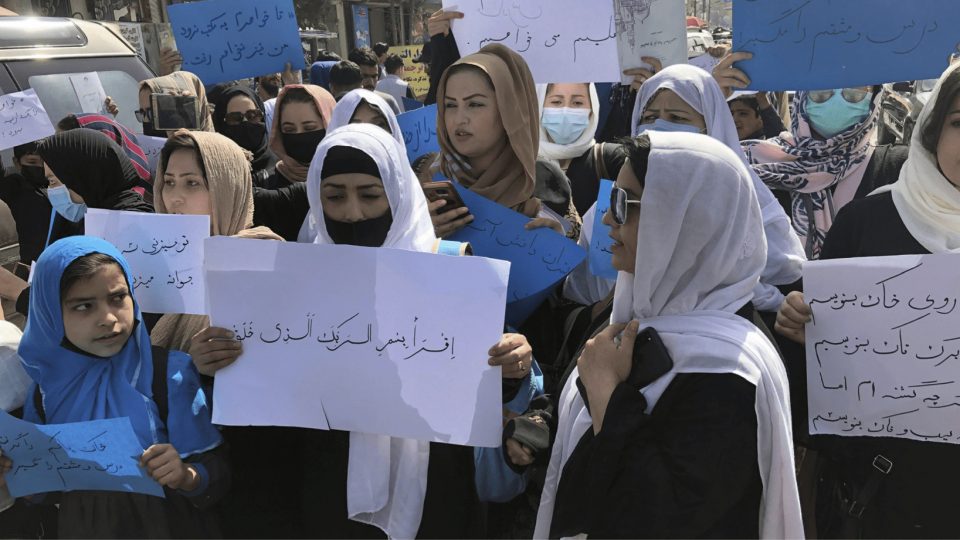
Education of children, especially girls, is something that many developing countries are paying special attention to. This is in keeping with the international law obligation under Article 28 of the Convention on the Rights of the Child, 1989 (CRC), which requires States Parties to “Make primary education compulsory and available free to all”. The same Article also obliges States Parties to make secondary and higher education accessible to all.
Atmane Tazaghart
Atmane Tazaghart

French Presidential election: a radicalism called abstention

Beware of polls that seem bent in advance. If there is a lesson to be learned from this French singularity which consists in electing the President of the Republic by universal suffrage, it is this one. These dear ''refractory Gauls'' take malicious pleasure in denying predictions, refusing the idea that the media, analysts or polls - these tools for measuring democratic debate, which they moreover love - can ''impose' ' the fatality of an unavoidable electoral scenario.
Hamid Zanaz
Hamid Zanaz

Putting an end to Western laxity towards political Islamism

For four decades, European governments have welcomed hundreds of Islamic leaders into their countries. Some do so for political and strategic reasons, others are motivated by the defence of human rights. One thing is certain, however: the intentions of these “unusual” arrivals have nothing to do with the expectations and motivations of European authorities. These Islamists slyly take advantage of the freedom of conscience guaranteed by the Western democracies that they viscerally detest. Worse still, they have no qualms about spreading a separatist discourse among Muslims living in the West, encouraging them to demand the application of specific rights. And ultimately aim at the application of Sharia law in their communities.
Roland Jacquard
Roland Jacquard

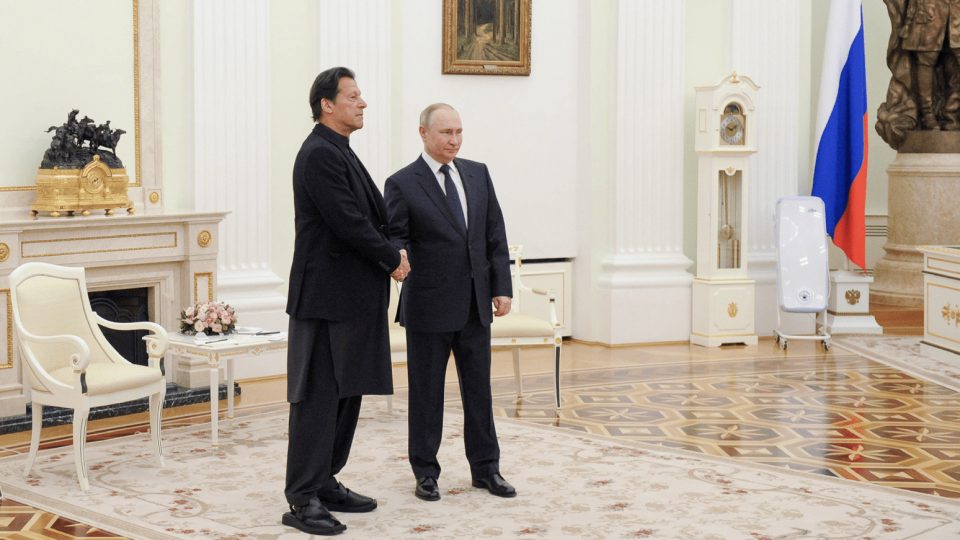
Pakistani Prime Minister’s ‘‘Indecent Joy’’ to be in Moscow on Day of Ukraine Invasion

Pakistani Prime Minister Imran Khan arrived in Russia on a 2-day official visit the very same day that Vladimir Putin launched an attack on Ukraine. On his arrival at Moscow airport, the South Asian leader was caught on camera gleefully quipping "What a time I have come! so much excitement". This reaction from the leader of a so-called democratic nation immediately caught media attention and was largely interpreted as Pakistan having thrown its support in favour of Russia on the Ukraine issue. The other interpretation could be Imran Khan’s complete disregard for the international rule based order and a lack of understanding of the gravity of the situation where a sovereign nation’s territorial integrity had been unilaterally violated by Russia.
Martine Gozlan
Martine Gozlan

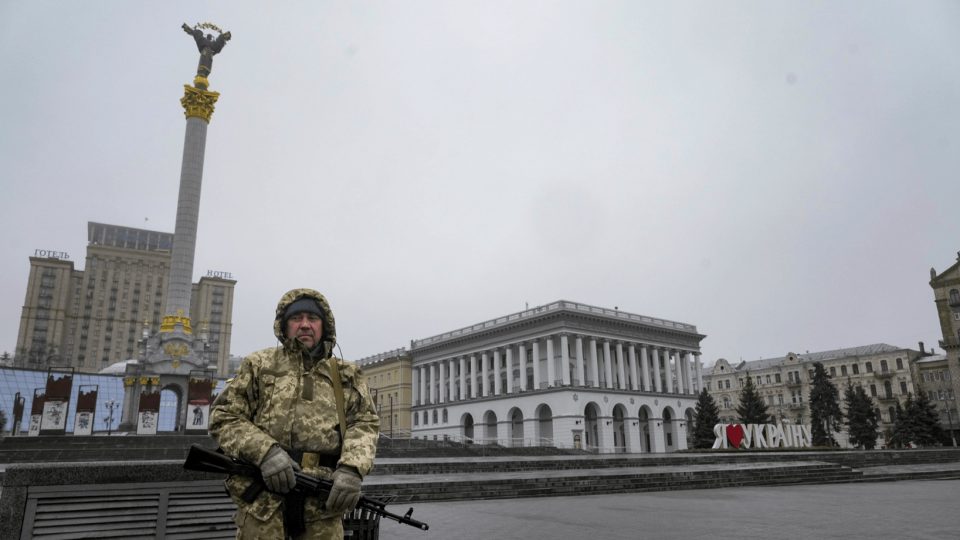
Ukraine: their voices under the bombs

Here and there. From the world (still) at peace to the world at war. From our screens, our streets, our cafés, our subways, to their alerts, their fleeing, their shelters, their deaths. From our first flowering shrub to their snow, their mud, their terror and their resistance. Between Paris and Kiev, this European capital three hours away by plane, a chasm has opened up. We watch, stunned, as the missiles smash a beautiful and great city, filled with the sounds of life so short a time ago, night years away. Kiev. I was walking along its immense boulevards in January. Kreshatyk Avenue leading to the Maidan, the old streets of the Podol district tumbling down to the Dnieper.
Ian Hamel
Ian Hamel

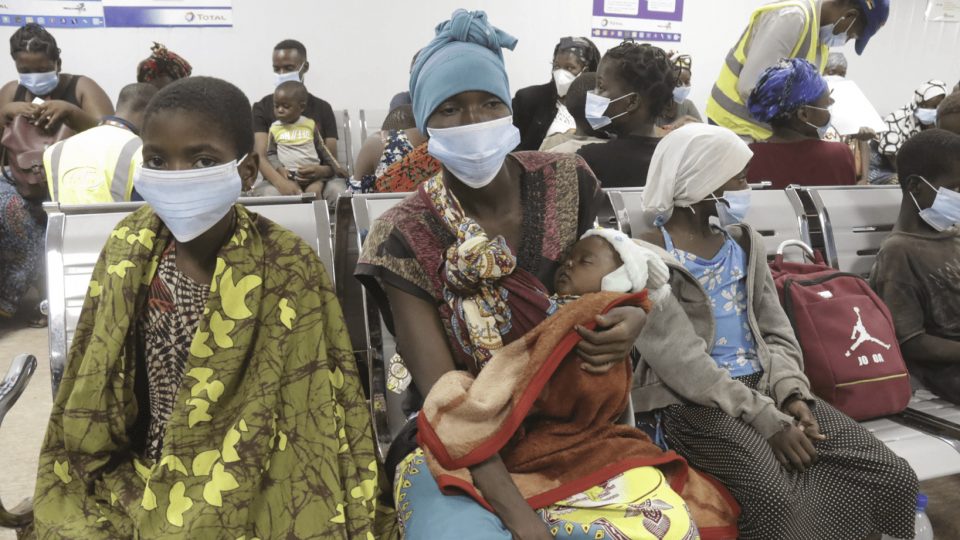
Mozambique: So-called Qatar-funded environmental organizations fuel violence

For several years, radical Islamists have been carrying out deadly raids in northern Mozambique. They sometimes venture into southern Tanzania. Their attacks kill hundreds of people and force tens of thousands to flee the region. Affiliated with the Islamic State, the Shabab managed to occupy the port of Mocimboa da Praia, with its 30,000 inhabitants, for almost a year and the town of Palma (75,000 inhabitants) for a month before being driven out. This move led to the withdrawal of the French group TotalEnergies, which was ready to invest several tens of billions of dollars in a very large gas project near the town of Palma. For a decade, Mozambique has been presented as a future gas Eldorado.
Martine Gozlan
Martine Gozlan

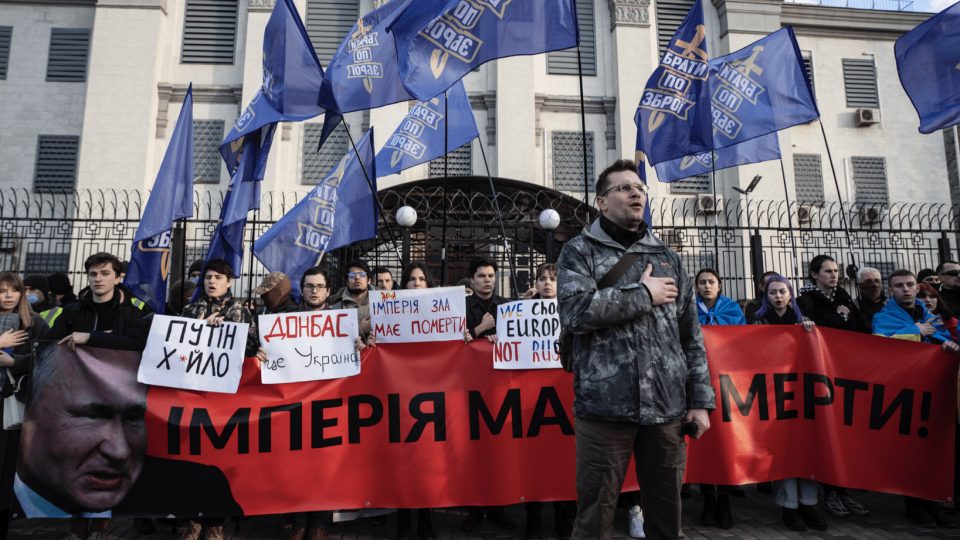
Between tanks and ghosts: Things seen in Ukraine

For anyone who visited Kiev - I was there at the end of January - in the weeks preceding Vladimir Putin's coup de force, the prospect of seeing the weapons speak is a heartbreaker and an appalling waste. For two reasons. Firstly, the youth I met in the cafés of Kreschatyk Street, the main and monumental thoroughfare of the Ukrainian capital, is fundamentally pro-European. In the region, they look more to Vilnius in Lithuania, an EU member state where many young Ukrainians study, than to Moscow.
Hamid Zanaz
Hamid Zanaz

Faced with the rise of Islamism, where is the Republic going?

Who would have thought it? The Republic, which nevertheless removed religion from the political field and invented secularism, is gradually succumbing to pressure from Islamists of all stripes, who are trying to test its reaction to the systematic pressure to impose their moral dictatorship by attacking freedom of conscience, and even freedom itself. The enemies of Western civilisation are working day and night for one goal: to bring down this political modernity and its positive laws and to apply Islamic law first in Muslim-majority neighbourhoods and then throughout Europe. Will Europeans thus become dhimmis in their own land in the coming decades?